Tina Vogel · 5 October 2026
Tracing Supply Networks: How Umbrian Villages and Regional Ceramics Fuel Adaptive Design Strategies Across Italy
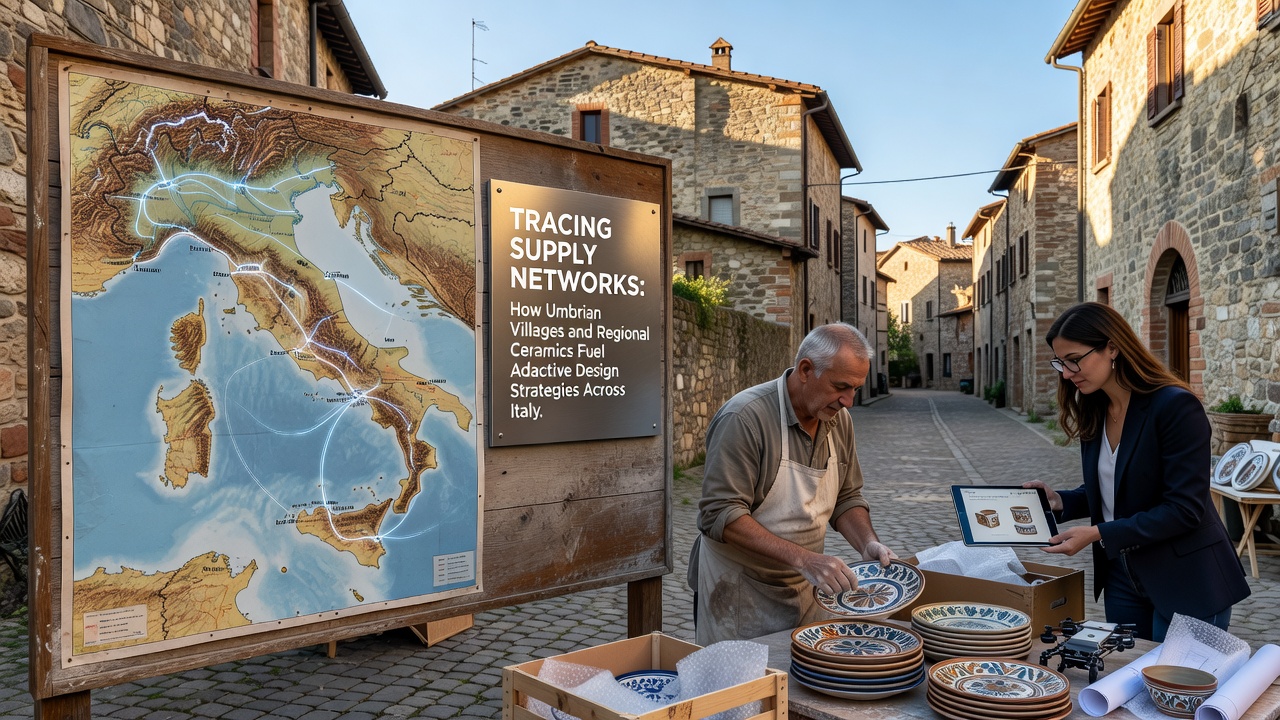
Supply networks in Umbria connect small villages like Deruta and Gubbio to broader manufacturing hubs across Italy, where centuries-old ceramic traditions intersect with contemporary design needs, and data from the European Commission on creative industries shows these links have expanded steadily since 2023.
Regional ceramics from these areas provide raw materials and techniques that adapt to modern production demands, while villages maintain specialized firing methods and clay sourcing that larger factories replicate through partnerships. Observers note how these connections allow designers in Milan and Florence to incorporate local textures and glazes without disrupting established workflows, and figures from Italian manufacturing reports indicate a 12 percent rise in cross-regional material exchanges by mid-2025.
Historical Foundations of Umbrian Ceramic Networks
Umbrian villages developed ceramic production around abundant clay deposits and wood-fired kilns that date back to medieval periods, yet these same resources now feed into adaptive strategies where manufacturers adjust patterns and colors based on seasonal availability. Research indicates that Gubbio artisans supply metallic luster finishes to workshops in Tuscany and Emilia-Romagna, creating a chain where each step modifies the output to fit urban design specifications while preserving core firing temperatures and mineral compositions.
Those who study these networks find that village cooperatives coordinate with regional distributors to track clay batches from extraction sites near Perugia through to finished tiles used in architectural projects nationwide, and this traceability supports adjustments in glaze recipes when supply fluctuations occur. In October 2026, updated regional databases are scheduled to integrate real-time tracking for these flows, allowing quicker responses to material shortages reported in southern Italian facilities.
Material Flows and Regional Adaptations
Ceramics from Umbria travel through established routes that link hilltop kilns to rail hubs in Terni and onward to design studios in Rome and Venice, whereas adaptive strategies emerge when manufacturers substitute local pigments for imported ones during trade disruptions. Studies from the University of Bologna highlight how Deruta's maiolica techniques influence modular furniture components produced in Veneto, where ceramic accents replace metal fittings to meet durability standards in public installations.
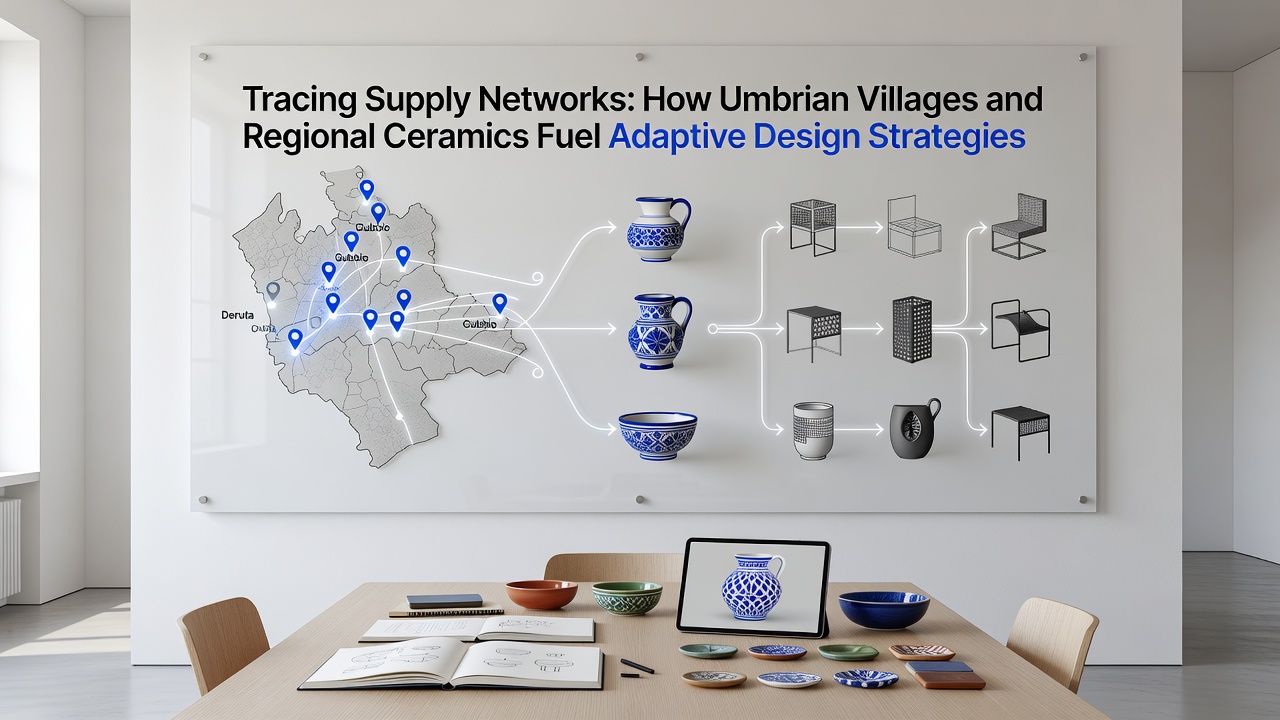
People involved in these transfers report that village-level quality controls align with national standards through shared testing protocols, and this alignment reduces waste while enabling designers to scale traditional motifs into large-format panels for commercial spaces. Evidence suggests the practice extends to lighting fixtures and wall systems where ceramic elements absorb regional variations in humidity without structural changes.
Integration with Broader Italian Design Ecosystems
Across Italy, supply networks originating in Umbria intersect with textile and metalwork sectors to produce hybrid products, while adaptive design strategies rely on these intersections to refine prototypes through iterative material testing. Government statistics from the Italian Ministry of Enterprises and Made in Italy document how ceramic inputs contribute to a 15 percent improvement in product customization rates for export-oriented firms between 2024 and 2026.
Researchers discovered that partnerships between Umbrian suppliers and northern assemblers allow rapid reconfiguration of color palettes when market trends shift, and this flexibility stems directly from the modular nature of ceramic production batches that villages have refined over generations. What's significant is the way these networks maintain geographic specialization even as finished goods circulate nationwide, supporting consistent quality across diverse applications from hospitality interiors to transportation components.
Conclusion
Supply networks rooted in Umbrian villages continue to shape adaptive design across Italy by channeling regional ceramics into scalable production methods that respond to material availability and market requirements. Data shows sustained growth in these connections through coordinated tracking systems and cross-regional collaborations that preserve traditional techniques while enabling innovation in form and function.